
THE CHALLENGE
During an unscheduled line shutdown, a customer from the automotive sector urgently contacted us:
ametal supportessential in their plastic injection line hadstructural damageand makeshift repairs with welding.
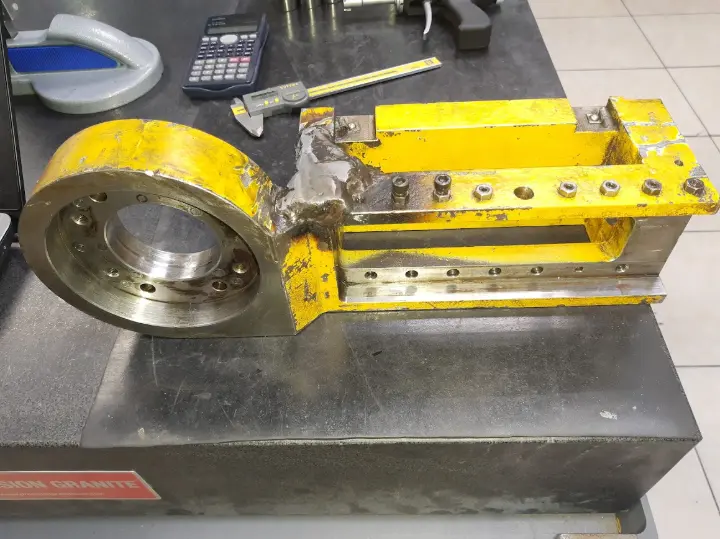
Diagnosis and Dimensional Survey
With the part already disassembled and time against us, we opted for atraditional reverse engineering process, without 3D scanning:
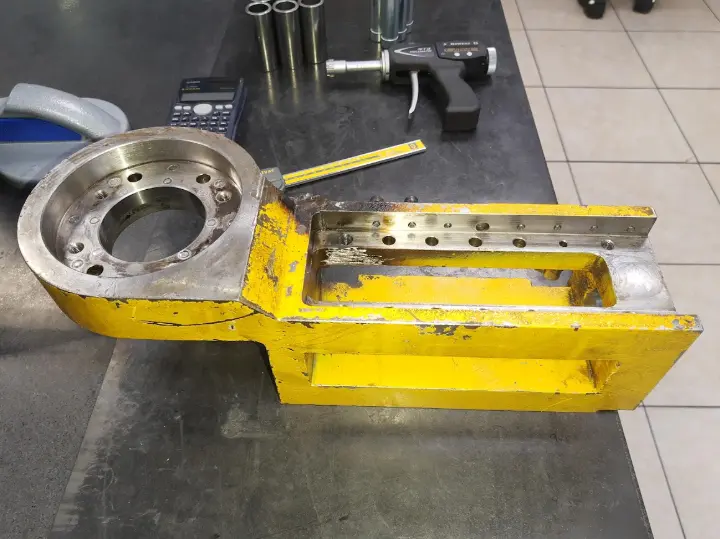
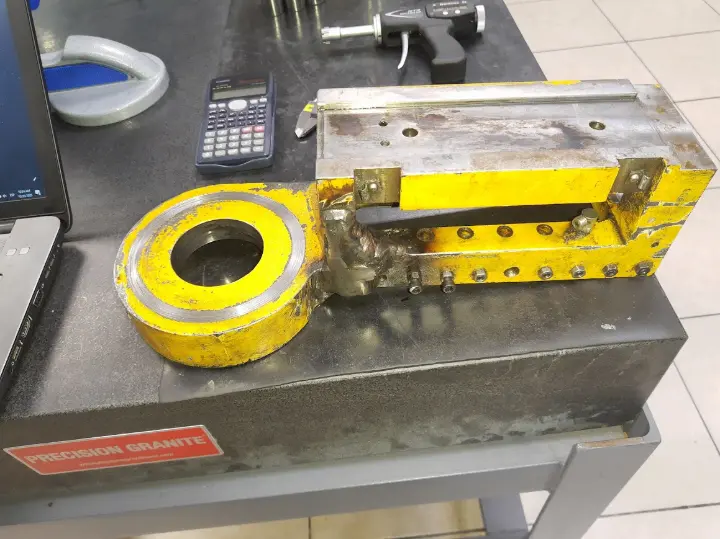
- Basicinstrumentation was used: calipers, depth gauges, and calibrated pins.
- All dimensions were directly reflected in SolidWorks; we couldn't waste time making notes to later transfer to the software.
- The priority was to capture thecritical dimensionsso that the part would fit perfectly with the existing assembly.
This process was documented with photographs of the damaged part and evidence of its previous repairs.
CAD Modeling and Design Improvement
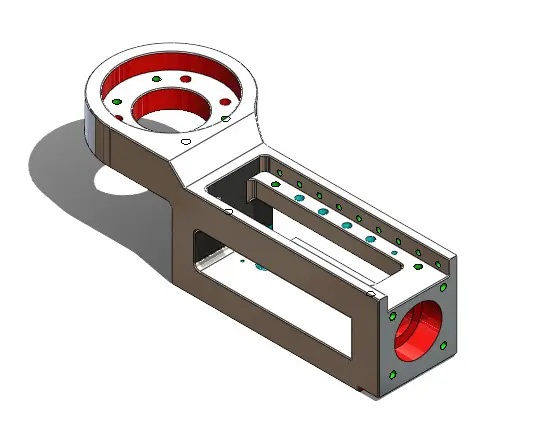
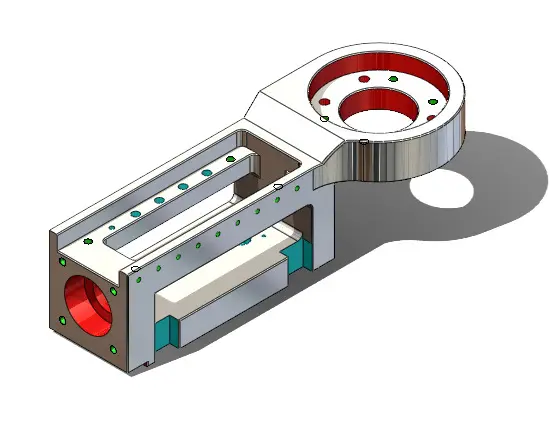
Using the obtained data, the 3D model was designed in CAD, faithfully replicating the original support, but taking the opportunity toimprove some aspects:
- The edge at 90° was reinforced where the highest amount of stress was concentrated and the same area where the crack in the piece began in vulnerable zones.
- We took note of the comments made by the technicians in order to implement improvements based on their observations.
- Aversion with adjusted toleranceswas prepared for better alignment with the mechanism.
Manufacturing with High-Performance Material
Instead of remanufacturing the support in aluminum, a more robust solution was proposed to the client:
- Selected material:Tempered and tempered 4140 steel.
- Advantage:Greater resistance to wear, impacts, and deformation.
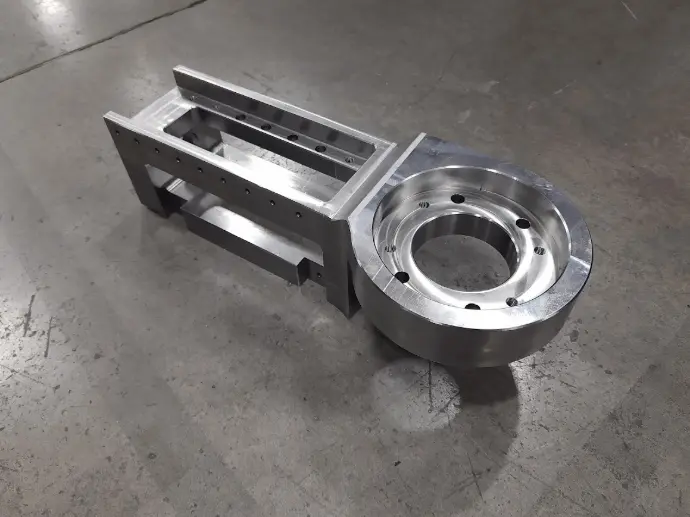
Once the redesign was approved, the piece was manufactured in a machining center and delivered ready for assembly.
Final Result: Piece in Operation
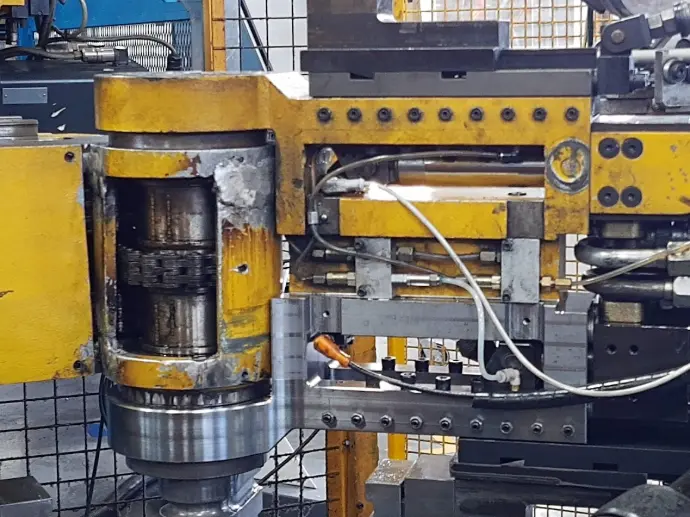
Its functionality was verifiedat 100%, and the risk of future failure was eliminated thanks to the new material and design.
Start typing here...